3rd Person
Omniscient vs Limited

We’re going to start by saying there are multiple aspects to 3rd PoV:
Distance From Character(s)
Limitation of Omniscience
Explicit vs Implicit Narrator
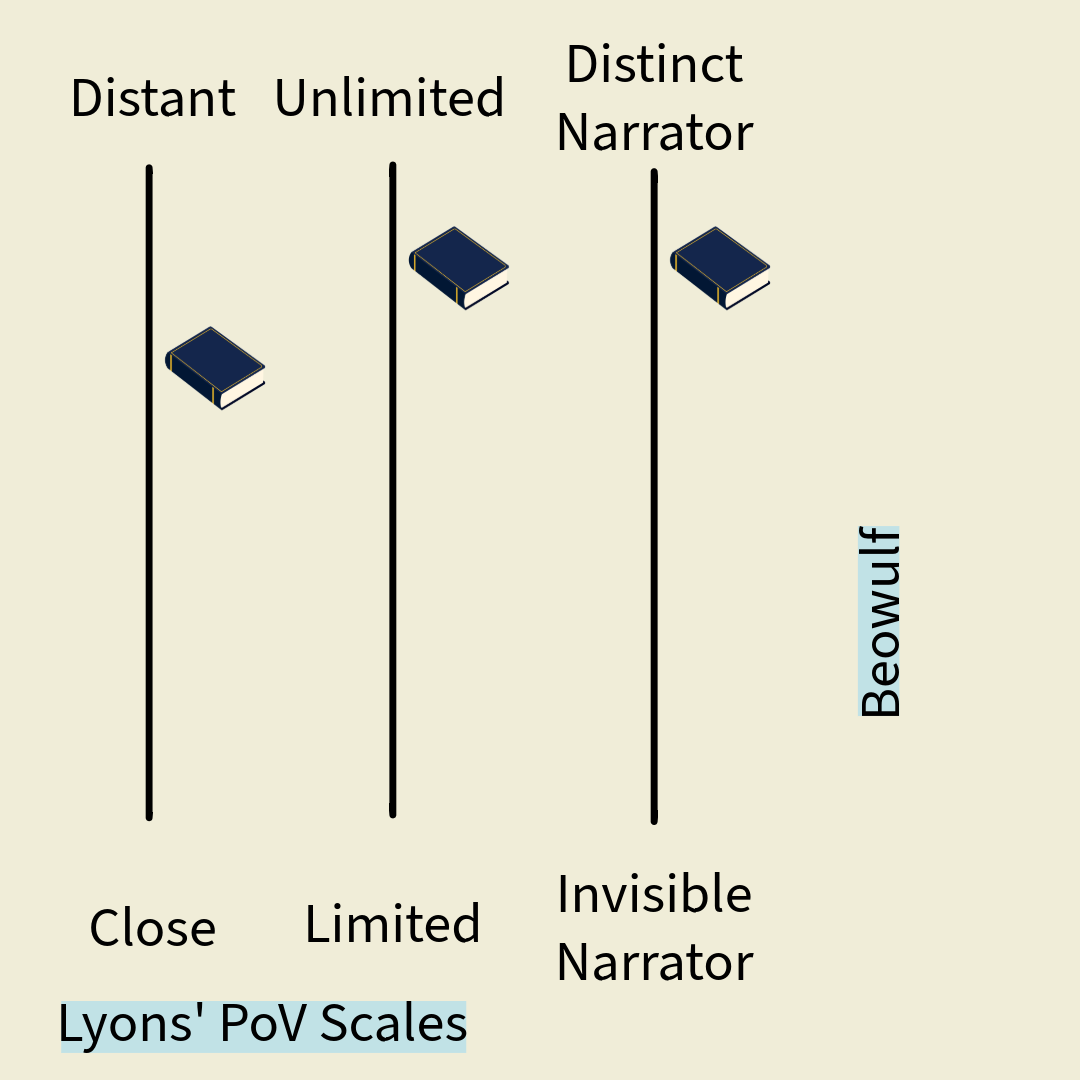
Like most things in writing, it’s probably better to talk a bit about the history of these things so we can see how we ended up where we are today. So let’s look at Beowulf.
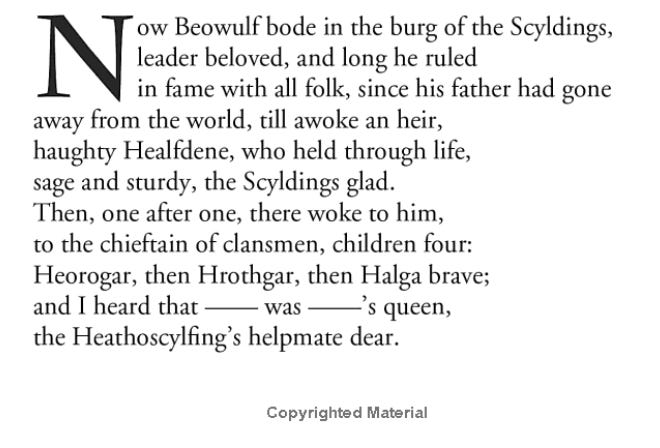
What PoV is this in? The story is about Beowulf, but there is also an “I,” a narrator who is talking about Beowulf. He is not a character in the story, he is just the person telling the story.
This is how people used to tell stories around a campfire. “I heard about this one guy named Beowulf… He fought a monster.” The storyteller is the omniscient narrator who knows all perspectives of the story. He sets the scene, he decides who is dear to who, who is beloved, who does things gladly. He knows the hearts and minds and motivations of the characters.
Out in the wilds of old literature, you’ll find that there’s more nuance to 3rd PoV than there is now. Much more nuance than you were likely taught in school, and much more nuance than you’ll find being marketed by modern publishers. Despite the “I” here, this is still 3rd omniscient.
“Well Lyons, wouldn’t that be 1st person omniscient?”
No. Because 1st person omniscient is actually a thing, but it requires that the narrator be a part of the story. We won’t get into that here.
Beowulf is an unknown narrator who exists outside the actual story, telling the story of Beowulf. This creates a sort of filter for the reader: author → explicit narrator → characters → readers. However, it also gives us a broader and more well-rounded vantage of the story.
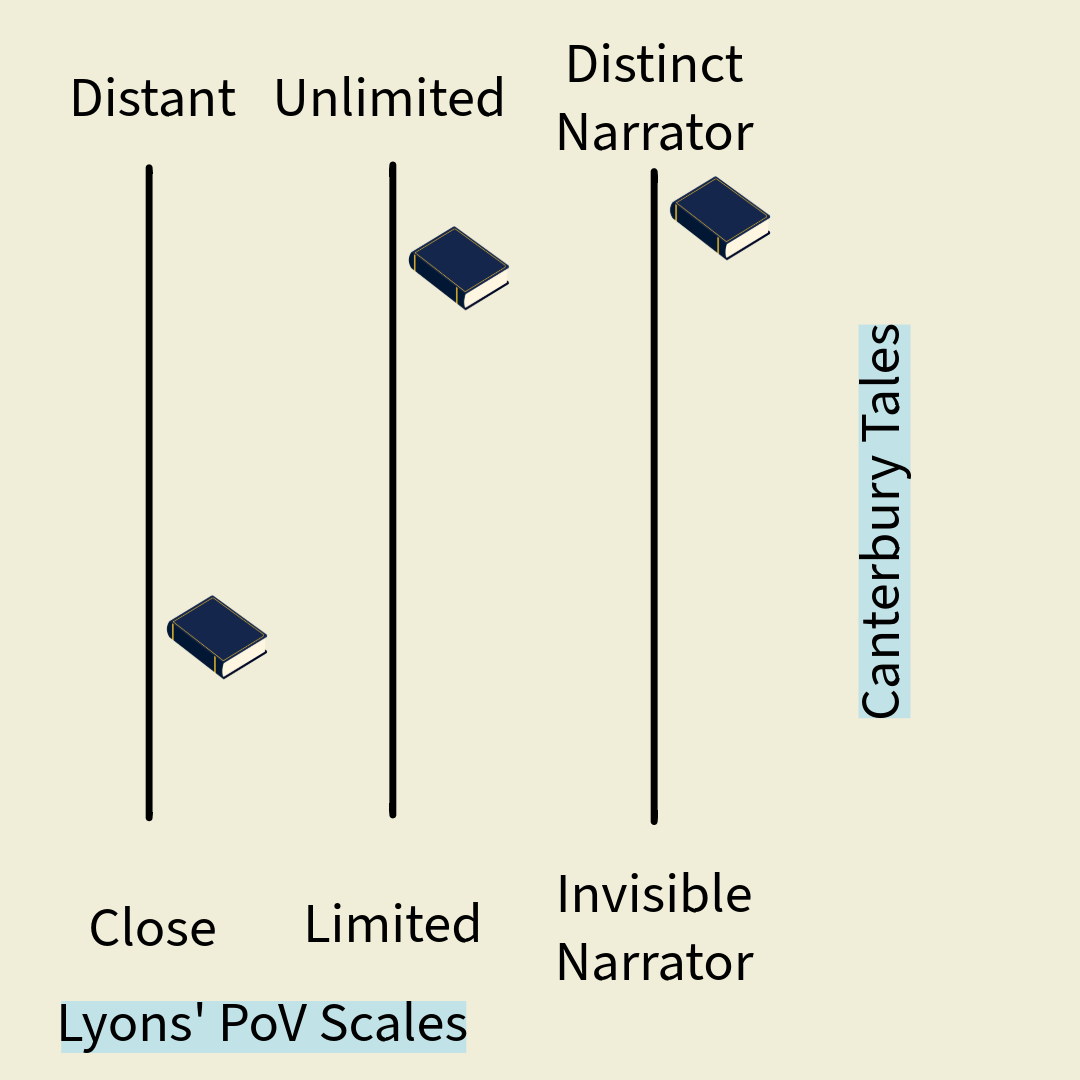
Next we get to The Canterbury Tales, which starts with Chaucer as the 1st person narrator, then shifts to 3rd PoV for the pilgrims… mostly.
Here we have the introduction to our “monk” narrator:
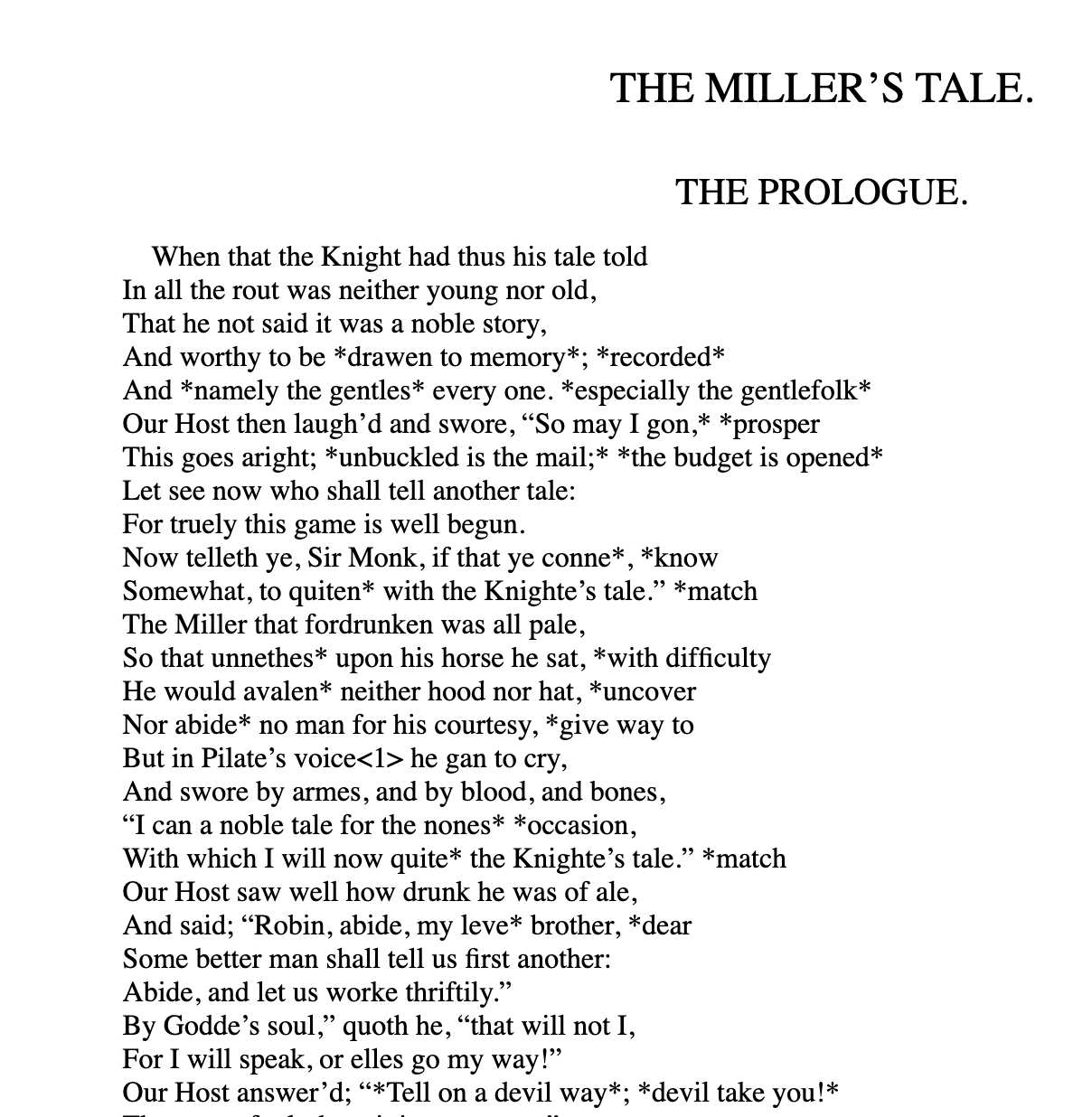
And here we have the monk narrating:
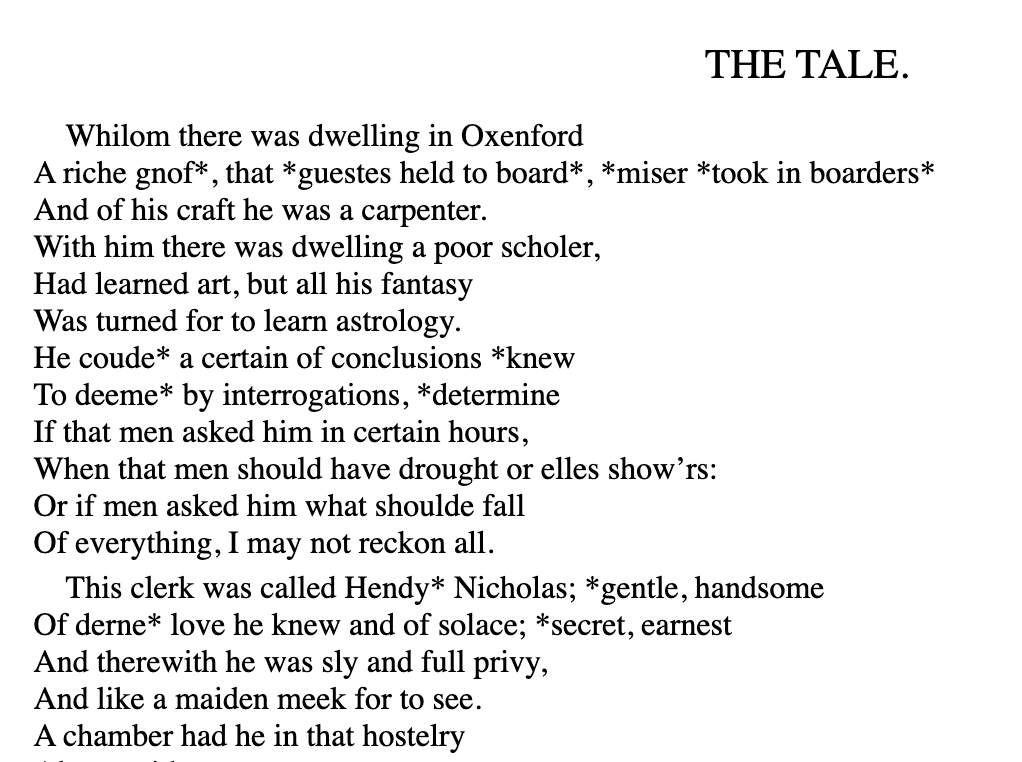
So we have a narration within a narration. A storyteller recounting the stories of other storytellers. Weird right? It is mostly in 3rd PoV, but has the occasional 4th wall break in 1st. A 1st person narrator recounting tales in 3rd person omniscient with 4th wall breaks. Are they the Monk’s 4th wall breaks or the main narrator’s? Who knows. Let’s note here that the PoV of TCT is a topic of debate. It is intentionally ambiguous.
And then comes another story within his tales, a story told without a single “I,” all in 3rd:
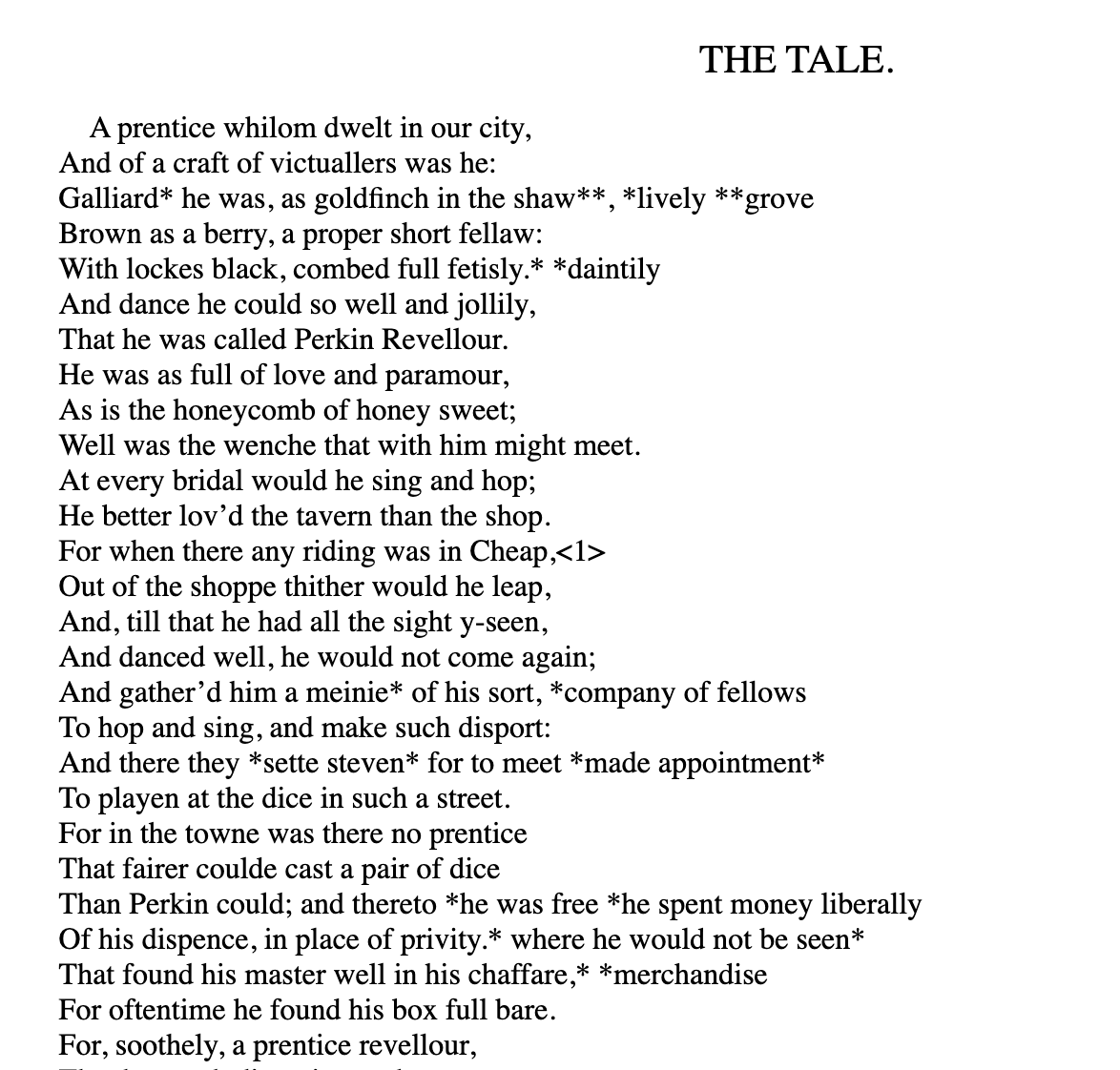
This is all quite strange for the modern reader, and kind of seems like one of those old jokes where a monk, a rabbi, and a priest all walk into a bar. It’s pretty much that same joke, just in a very very long form. Different perspectives of the same satire to create a larger satire.
But what was Chaucer doing with these narrations within his narrations?
He was giving the story different narrative frames. He was framing the story from the perspective of different characters, each a narrator in their own fashion.
Every story, regardless of PoV, has a narrator, and you have to understand who that narrator is to understand how the author used PoV.
Something Chaucer did really well was clearly differentiate each narrative frame. Each frame is distinct and purposeful.
The Star Wars crawl at the beginning of each movie is a form of narrative frame. A narrator starts by providing a setting and history, then the story switches to a new frame (visual), and we get the story as if it is happening now, even though it is happening—as the narrator says—a long time ago and far far away. The same sort of distinct narrative frame is at the beginning of the LotR movies.
In many instances, 3rd omni is used like this. There is a distant and explicit narrator providing a narrative frame in the beginning, and then the narrator steps back and reveals the story from a closer perspective. But don’t confuse a narrative frame with an infodump or unframed exposition.
Just because the narrator is an explicit character outside the story, doesn’t necessarily mean that they are stale or that there is not a closeness of sorts with their PoV. Take Henry Fielding’s Tom Jones for instance:

Oftentimes, even when an omniscient narrator is explicitly a person outside the story, they are still a character. An explicit narrator doesn’t always equate PoV distance, even if it does create distance between the reader and the main characters of the story.
Things Begin to Change
We can see a definitive shift over time from “a person telling a story about a person” to “a story about a person” style of narration.
The narrators in books change from an explicitly distinct person telling a story, to an implicit, almost invisible narrator.
For instance, Dune:
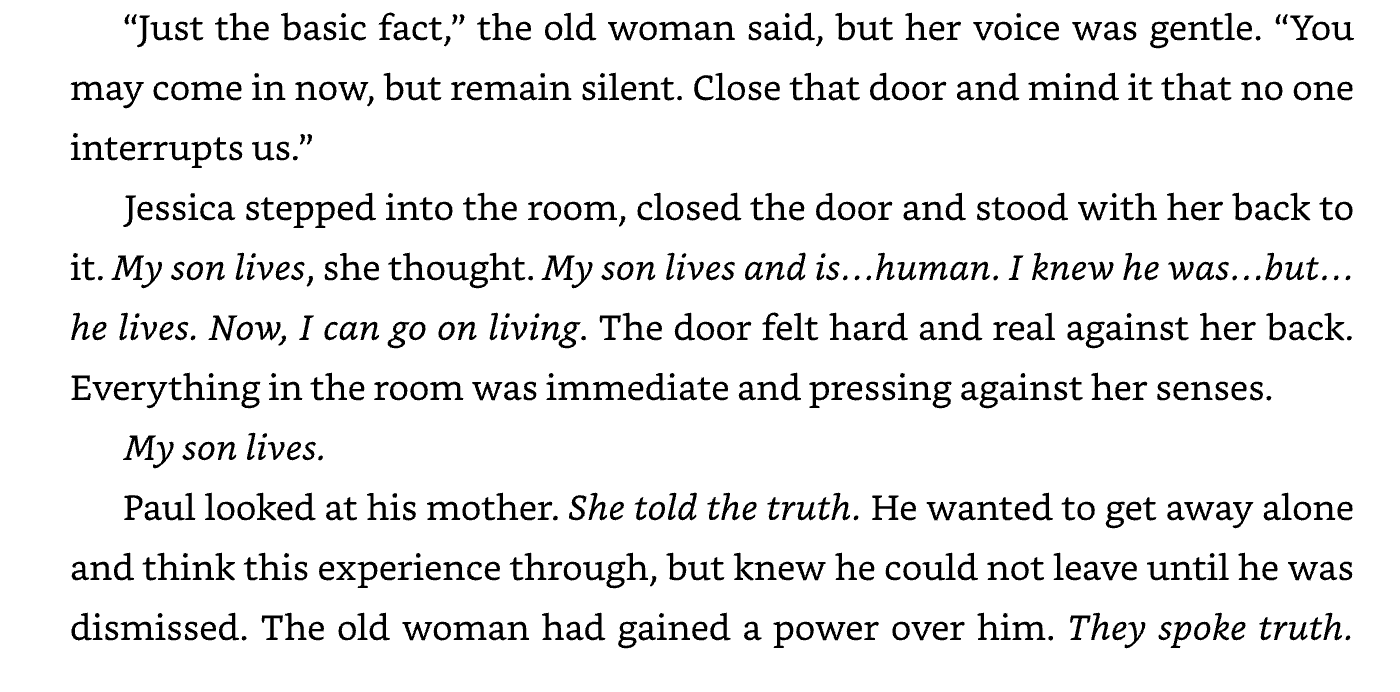
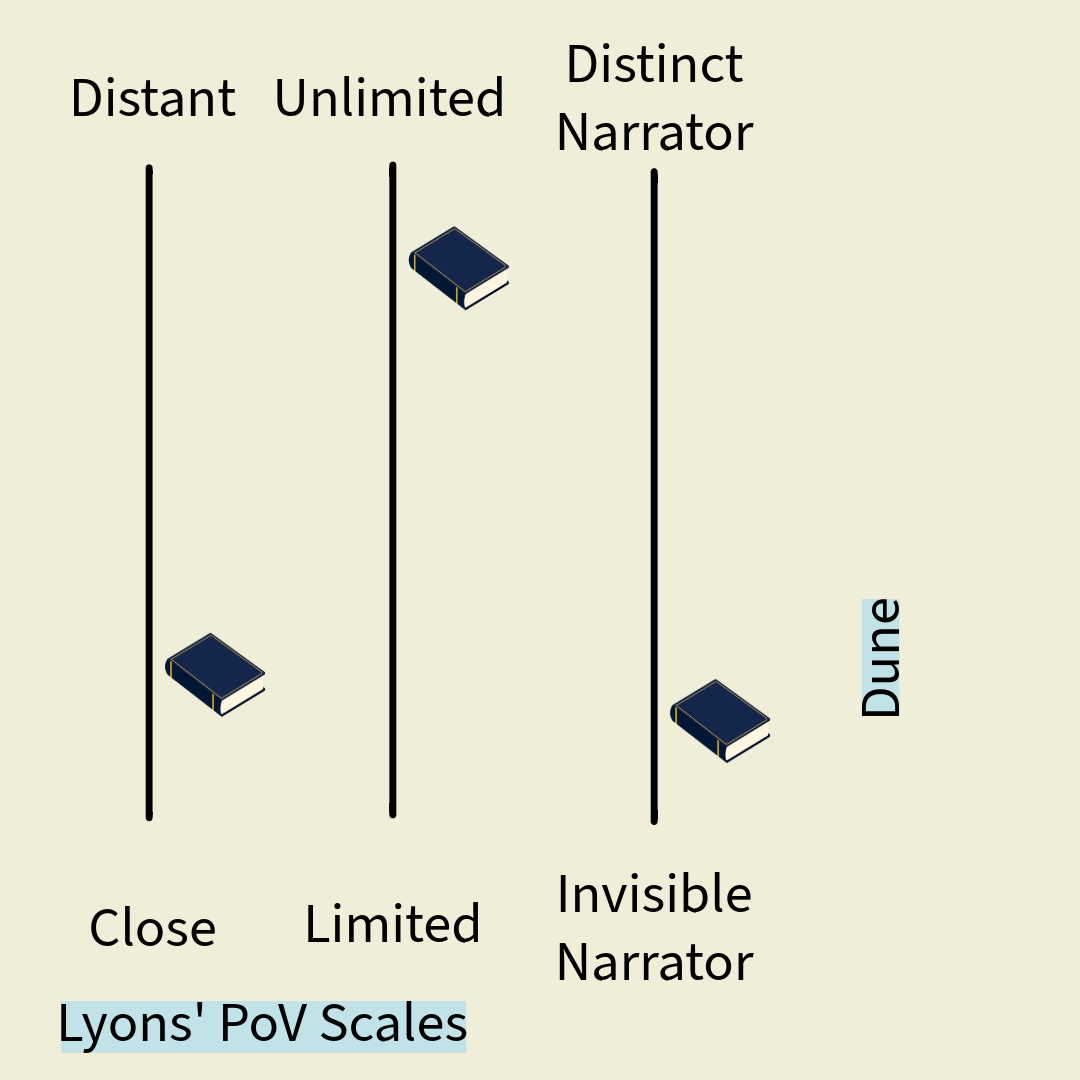
Here we have Jessica and Paul’s thoughts. The narrator is omniscient, still very close to the characters, but doesn’t strike you as a particular explicit person or character themselves. Instead of being filtered through a distinct narrator, which can create distance from the characters, the reader is directly connected to each character’s thoughts.
Dune is also moderately limited in how many characters’ minds you enter, but not limited to one per chapter or section. 3rd omniscient limitations are on a spectrum. Of course a story would be way too messy if you had all character’s thoughts all the time, so typically the author chooses a set of characters whose thoughts are more important. Alternatively, with a distant narrator, the thoughts are more generalized and we only get a vague idea of everything.
Still, the trend in the last decades has been toward more limitations on PoV.
Here’s a bit from Pride and Prejudice:
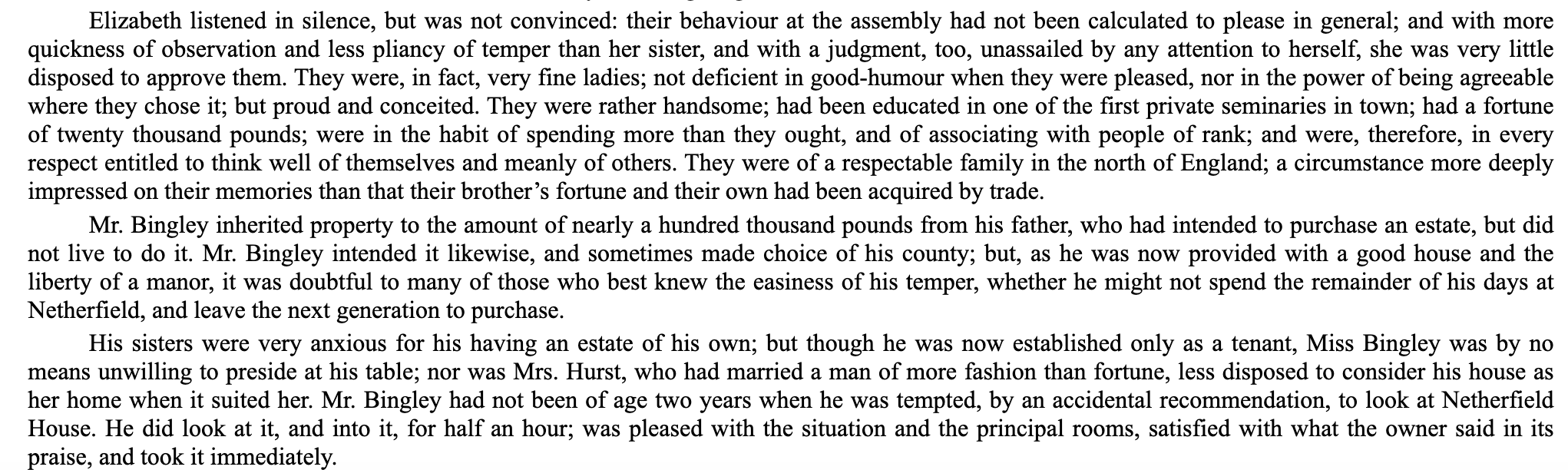
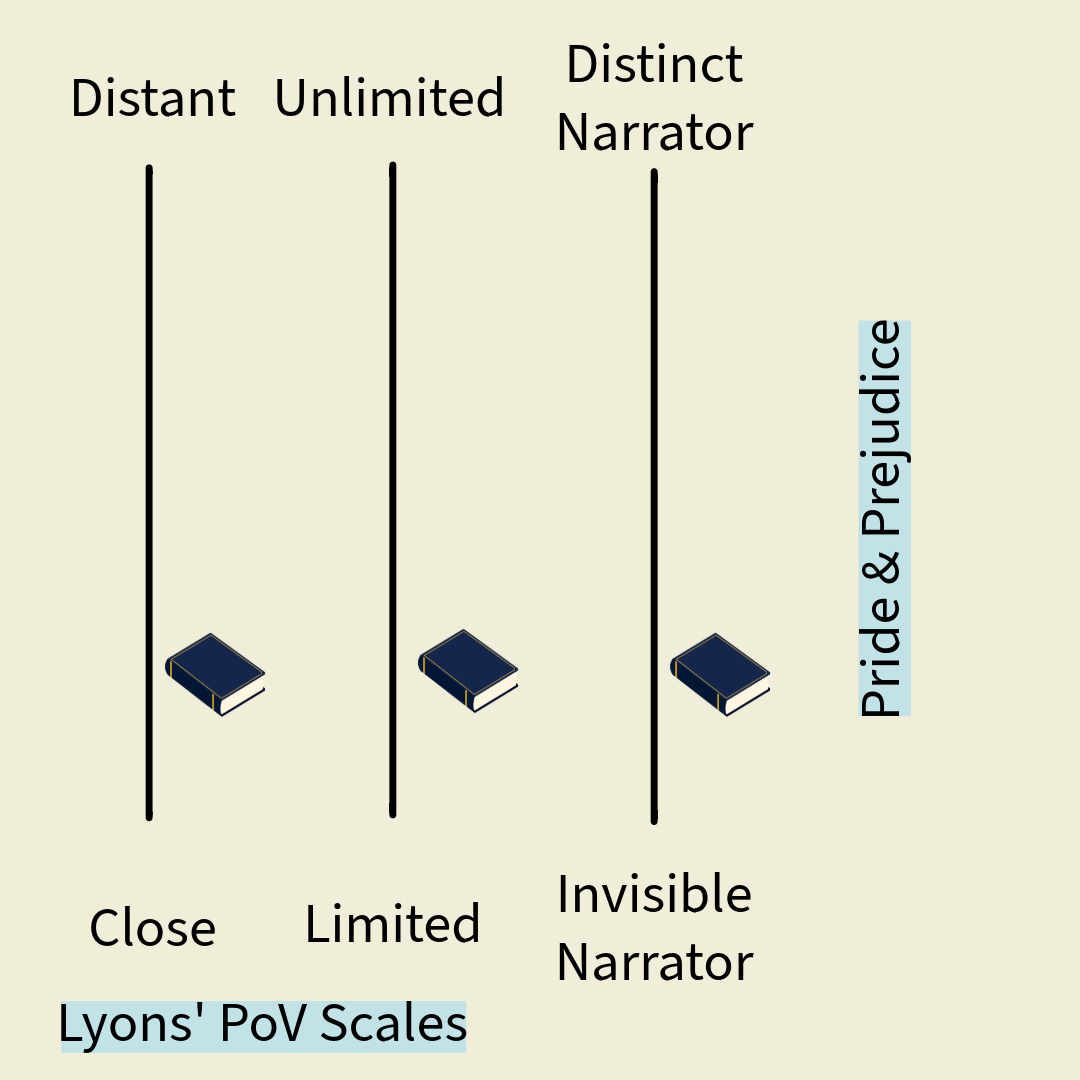
Jane Austen was one of the earlier writers of what we now call 3rd limited PoV, using free indirect speech (first-person-like thoughts within 3rd-person narrative). The PoV in P&P is not entirely 3rd limited, but more so than most who came before her. The narration/prose is filled with the opinions and thoughts of Elizabeth, and while Elizabeth is talking about herself in 3rd person, her perspective/opinions/thoughts and that of the narrator are blended.
And the thoughts of others (“his sisters were anxious”) could be just assumed by her.
Sometimes I will see people make accusations of head hopping at any point that another character’s emotions are mentioned. But in our own lives, we all assume what other people’s emotions are often. “Ah crud, she’s mad.” There isn’t a whole conscious dialogue in your mind about how her brow furrows and she purses her lips. One glance can tell you that a person is angry, and all the indications of that are in the background to your own personal internal narration.
Hopefully the above passages (all available on Project Gutenberg except Dune) can give you a sense of how varied 3rd PoV was historically and how it started trending toward invisible/implicit narrators, narratives that are closer to the characters’s minds, and more limitations in PoV.
To summarize the examples:
Beowulf, The Canterbury Tales, and Dune are all variations of 3rd omniscient PoV.
Beowulf and The Canterbury Tales have narrators that exist outside the story, but they still know the thoughts and feelings of the characters.
While both Beowulf and TCT have narrators outside the story, Beowulf’s narrator is a more distant PoV, while TCT’s is a rather personal/close narrator, who is something of a character himself.
Dune’s narrator is more “invisible”—all the characters thoughts and feelings are made known to the reader, but you don’t feel as if someone is telling you a story because there is no directly framed narrator.
Pride and Prejudice has limitations by way of the narrator really only expressing one character’s thoughts and feelings, as if it were 1st person, but told in 3rd. Thus, 3rd person limited started to emerge.
Multi-PoV & Head Hopping
As time went on, more stories have leaned toward a close 3rd limited PoV. Essentially, it is a 1st person story told in 3rd person, and limited to one character.
But 3rd person limited PoV can also have the thoughts and feelings of multiple characters: multi-PoV 3rd limited. This is very popular in SFF today, and includes books like Game of Thrones.
Unlike 3rd omni, multi-PoV 3rd limited does not have everyone’s thoughts and feelings intermingling, but one limited PoV that transitions to another limited PoV, usually with chapter or scene breaks. But not always. You can still transition to a new PoV without a scene or chapter break if you do it clearly.
And this is where we talk about head hopping and how head hopping is different from both 3rd omni and multi-PoV 3rd limited.
Clarity. Consistency. Purpose. Framing.
Head hopping is when the author does not execute the above concepts correctly. The most common head hopping error is having multiple characters’ thoughts/feelings in the same paragraph, especially if there is dialogue from one of the characters in that paragraph.
You can see in Dune that it is very clear when Paul is thinking and when Jessica is thinking. And throughout the book, 3rd omni is used consistently and with a purpose. It is not a tool of convenience that comes and goes as the author needs it for the plot, but is a feature of the entire book.
The most important aspect of PoV is clarity. If it is difficult to discern who is speaking/thinking from the prose, then it is likely head hopping. If you have one person remembering an event, but somehow knowing another character’s thoughts in that event, that’s head hopping. If you don’t make it clear when the PoV shifts, that is head hopping.
It can be jarring if it feels like one chapter is limited, and one chapter is omni, with no rhyme or reason beyond “well, I conveniently just don’t want the reader to know that yet.”
Modern books tend to have a very clear distinction between each character PoV, even featuring character names as chapter titles or subtitles. Increasingly, readers are confused or deterred by less distinct PoV switches, even those that have been historically acceptable and are easy to understand for those who grew up reading a lot of 3rd omni.
The important point with omniscient is that it is multiple PoVs consistently and clearly throughout. This doesn’t translate to every single thought from every character, but often several main characters and perhaps even the antagonists. There are always some limitations on omniscience.
Whereas multi-PoV 3rd limited handles one character’s thoughts for a significant block of prose, then switches to a different character’s PoV.
The modern formula for 3rd PoV books is close, limited, and with an invisible/implicit narrator.
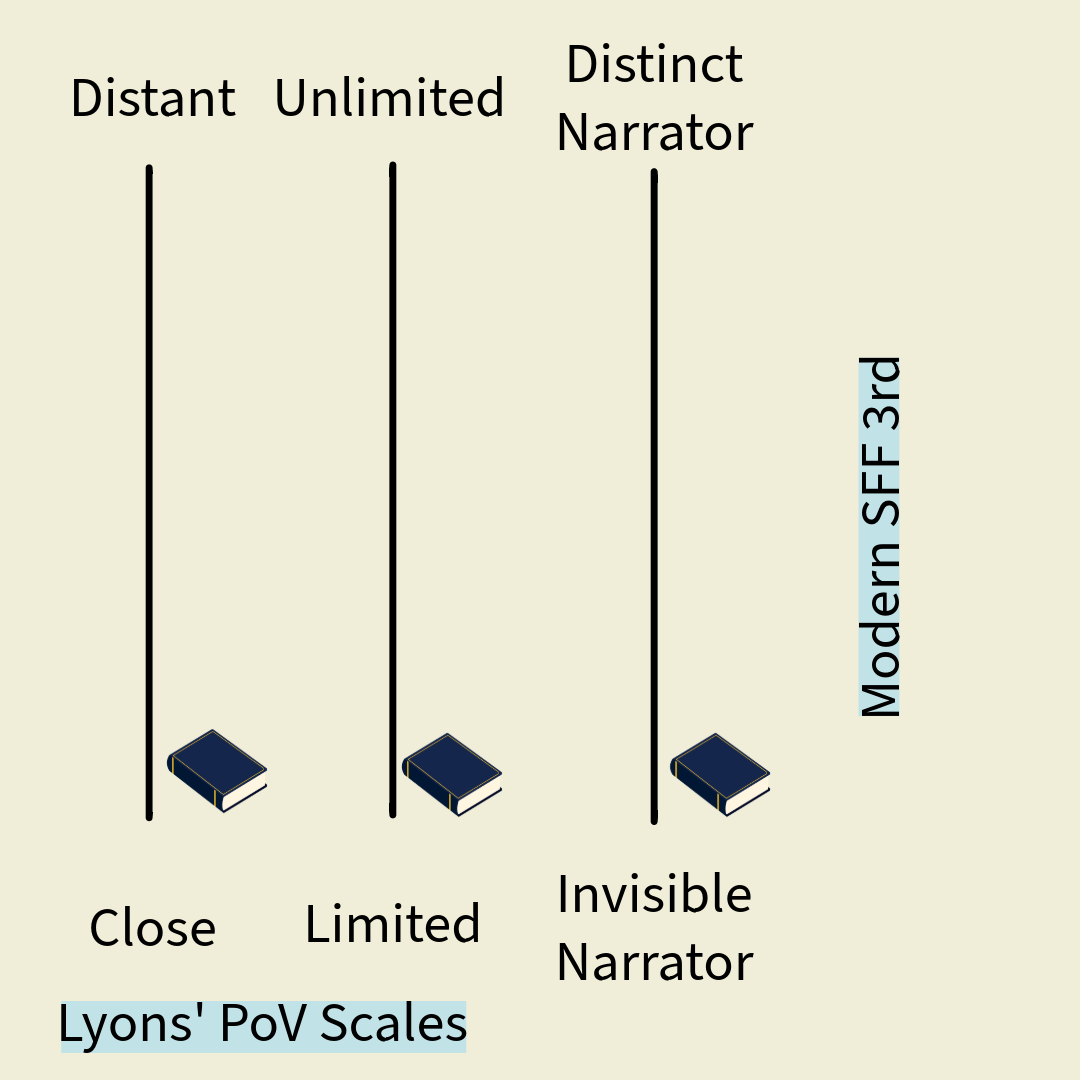
Here are a few scales to illustrate how I’d interpret the PoVs of the main books talked about: